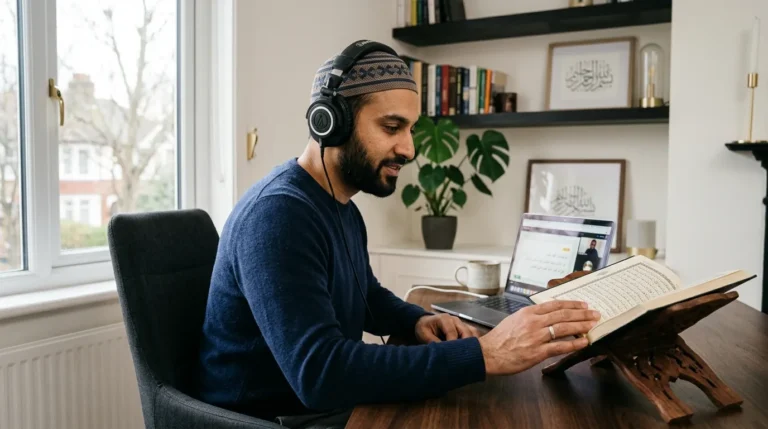
Staying Consistent With Quran Class When You’re Fasting and Tired
Scheduling classes at a lower-energy time rather than fighting against it, keeping lesson expectations slightly lighter during the hardest fasting hours, and protecting sleep around suhoor are the most practical ways to stay consistent with Quran class through Ramadan without burning out.
Ramadan often brings genuine enthusiasm for Quran study alongside genuinely lower physical energy from fasting — and the tension between the two is real, not imagined. Staying consistent usually means working with that energy dip rather than pretending it isn’t there.
Why Energy Dips Are a Real Factor, Not an Excuse
Fasting changes blood sugar, hydration and sleep patterns in ways that genuinely affect concentration, especially in the hours before iftar — acknowledging this honestly, rather than treating tiredness as a lack of willpower, leads to more sustainable planning.
Choosing a Class Time That Works With Your Energy, Not Against It
For many people, energy is noticeably lower in the late afternoon before iftar and higher shortly after eating or after taraweeh, so shifting a class time during Ramadan specifically, rather than keeping a non-Ramadan schedule by default, often makes a real difference.
Lightening Expectations Slightly During the Hardest Weeks
It’s reasonable to expect somewhat lighter lesson pacing during the most physically demanding fasting days without treating this as falling behind — Ramadan progress can be measured differently than a regular month’s pace.
Protecting Sleep Around Suhoor
Disrupted sleep from waking for suhoor is one of the biggest contributors to daytime fatigue, so protecting even a short nap or consistent sleep window around it, where possible, tends to help concentration more than any single change to the class itself.
Communicating With Your Teacher When a Specific Day Is Hard
A brief, honest message to a teacher on an especially difficult day — rather than silently pushing through or skipping without explanation — usually leads to a more adjusted, realistic lesson than either alternative.
Why Skipping Entirely Often Backfires
Missing class altogether during Ramadan, intending to return to normal pace afterward, often means losing momentum that’s harder to rebuild in Shawwal than it would have been to maintain through a slightly lighter Ramadan pace.
Balancing Quran Class With Taraweeh and Other Ramadan Commitments
With taraweeh, extra family gatherings and other commitments added to a normal schedule, Quran class sometimes needs to shift days or shorten temporarily — flexibility about the logistics, while protecting the consistency itself, is usually the more sustainable approach.
Simple Adjustments That Help Without Overhauling the Schedule
- Keep a light snack and water easily accessible right after class if it falls close to iftar time
- Ask about shorter, more frequent review sessions instead of fewer long ones during the hardest weeks
- Build in a buffer day for Fridays or weekends to catch up without pressure
What Realistic Success Looks Like by Eid
Consistent attendance with lighter pacing through Ramadan, rather than an intensified pace that burns out by mid-month, usually leaves a student in a stronger position heading into Shawwal than an all-or-nothing approach would.
Key Takeaways
- Fasting genuinely affects concentration — low energy during Ramadan isn't a lack of effort
- Shifting class time to a higher-energy window often helps more than forcing the usual schedule
- Lighter pacing during the hardest fasting days is reasonable, not falling behind
- Protecting sleep around suhoor helps concentration more than most other adjustments
- A brief honest message to a teacher on hard days leads to better outcomes than silence
- Skipping class entirely often costs more momentum than a lighter but consistent pace
- Flexibility on logistics, while protecting consistency itself, is the sustainable approach
- Steady attendance through Ramadan usually beats an intensified pace that burns out
Frequently Asked Questions
Is it normal to feel too tired to focus during Quran class in Ramadan?
Yes, fasting genuinely affects blood sugar, hydration and sleep, which can reduce concentration — this isn't a lack of effort.
Should I change my class time during Ramadan?
Many students benefit from shifting to a time when energy is relatively higher, such as after iftar, rather than keeping a non-Ramadan schedule.
Is it okay to expect less progress during Ramadan?
Yes, lighter pacing during the most demanding fasting days is reasonable and doesn't mean falling behind in any lasting sense.
How does suhoor affect concentration during class?
Disrupted sleep from waking for suhoor is a major contributor to daytime fatigue, so protecting sleep around it often helps more than other changes.
What should I do if a specific day feels too hard?
A brief, honest message to your teacher usually leads to a more realistic, adjusted lesson than silently pushing through or skipping.
Is it better to skip class entirely during hard weeks?
No, skipping often means losing momentum that's harder to rebuild afterward than maintaining a lighter but consistent pace would have been.
How do I balance Quran class with taraweeh and other Ramadan commitments?
Shifting days or shortening sessions temporarily while protecting overall consistency tends to work better than rigidly keeping the exact same schedule.
What does realistic success look like by the end of Ramadan?
Consistent attendance with a lighter pace usually leaves students stronger by Eid than an intensified pace that burns out mid-month.
Keep a Sustainable Ramadan Routine
Book a free trial class and build a Ramadan schedule that fits your real energy levels.
Book a Free Trial Class Chat on WhatsApp